Tuesday, February 9, 2010

Texts for Transfiguration Sunday, February 14, 2010
Exodus 34:29-35 * Psalm 99 * 2 Corinthians 3:12-4:2 * Luke 9:28-36, (37-43)


Prayer:

O God, as your Child Jesus drew apart
to be in prayer with you,
help us to be apart for a time with you.
W offer our prayers
for the transformation of the world and of our own lives. Amen

Exodus 34:29-35

While Moses was on Mount Sinai the first time, the people of Israel, under Aaron’s leadership, made a golden image of a calf as a symbol of God. So irate was Moses when he discovered the revelry around the Calf that he smashed the stone tablets on which the Ten Commandments were written . God was angry that the people had broken the commandment against casting idols of the deity, but in time has forgiven them; he has invited Moses to ascend the mountain again to receive a replacement set of tablets. While there, he has conversed with God. Vv. 10-26 are the “covenant” (agreement) God has made with the Israelites. In exchange for


  • being their god ;
  • acting among them so that the indigenous peoples of the land will recognize Israel’s uniqueness; and
  • giving them victory over these peoples
  • the Israelites must, as well as obeying the Ten Commandments:

  • not enter into any pact with these peoples
  • destroy their religious symbols
  • not worship with them
  • not intermarry;
  • dedicate their first-born to him
  • keep the feasts of Passover (Weeks, Shavuot, ) and “ingathering” (Tabernacles, Sukkot);
  • observe the Sabbath
  • make pilgrimages three times a year, and
  • offer the first of the harvest to God
  • Now Moses descends the mountain again. His face is radiant: an expression of his privileged place as servant close to God: he reflects God’s glory. Perhaps “returned”s an echo of the Golden Calf incident. Moses dons a “veil” to avoid overwhelming his hearers with God’s reflected glory. Again Moses speaks with God. One account says that “the LORD used to speak to Moses face to face” but another (from a different source) says that God only allowed Moses to see his back ). A final point: the word translated “shining” karan, can be written out as keren, meaning horn. Thus Jerome translated it, and so Michelangelo sculpted Moses with horns (seebelow)!


    Reflections


    • Moses has been on the mountain receiving the ten commandments. His face is shining because of talking with God. I picture someone who is glowing with being newly in love, or the glow of a woman who is pregnant, or the glow of a parent proud of her or his child...
    • "Mountaintop experiences" - a phrase we often use to describe those experiences where we feel close to God. We describe it as 'mountaintop' because we always know we can't stay up there - we always come walking, running, stumbling, trudging, or crashing back to earth again. What's your mountaintop experience(s)?
    • Diminishing Returns - the example of eating too much ice-cream. The first cone is great, and you want another. The second is good too - you're almost full. By the end of the third though, you're getting diminishing returns. The cone is good, but you are starting to feel sick. You ate too much, and now the joy of the first cone has decreased because you're stuffed. Can God-experiences have diminishing returns? Why would it be bad to be on the mountaintop with God all the time?
    • Chris Haslam writes that Moses' face being "radiant" meant that God's glory was reflected in Moses' face. I really like that description. If we are made in God's image, then can we reflect God in our whole being.
    • Have you ever met someone who radiates the peace or love of God...?

    2 Corinthians 3:12-4:2


    2 Corinthians is a letter, written in the style common in the first century AD. From the text, we know that Paul wrote it in Macedonia after leaving Ephesus, probably in the autumn of 57 AD. It gives us a picture of Paul the person: an affectionate man, hurt by misunderstandings and the wrongs of his beloved fellow Christians, yet happy when he can praise them. The letter's prime intent is to combat errors which have arisen in the Christian communities in the Achaian peninsula of Greece.

    Paul contrasts his ministry with that of Moses. In 3:3, he says that his readers, supported and enabled by the Holy Spirit, are “a letter of Christ”, prepared by him and his colleagues: a letter written on “tablets of human hearts”, not on “tablets of stone”. This is the “confidence that we have through Christ”

    (3:4). The dead letter of the Law has been replaced by the living letter of the Spirit. Moses wore a veil lest the radiance of God’s glory, shown in his face, be too much for his hearers. The new covenant in Christ sets aside the old. The thinking of Israelites was frozen in time (“hardened”, 3:14), and it still is: when they hear the Law read (“old covenant”, 3:14; “Moses”, 3:15), they only see God’s plan for saving people dimly, i.e. through a “veil”, but when one is converted (“turns to the Lord”, 3:16), one sees the plan clearly. In Judaism and Christianity, the motive force is the spirit, but for us Christ and the Holy Spirit are one (“the Lord is the Spirit”, 3:17), and in Christ we have “freedom” from the Law: as we become more and more Christ-like, we are more and more able to render to God the honour (“glory”, 3:18) he is due, with the Spirit’s help. In 10:9-11, Paul’s accusers claim that he is strong on words but weak on action. He now retorts: “by God’s mercy” (4:1) he has turned from persecuting Christians to “this ministry” which he does with “great boldness” (3:12), not losing heart. Unlike his accusers, he has cast aside his horrible hidden deeds of the past, namely unscrupulous acts and misrepresentations of the gospel (4:2). He speaks openly, appealing to all to authentically discern the truth.


    Reflections

    • Paul tells us that in Christ, the veil is set aside between us and God. Christ brings us right up to God, face to face. The ancient Celts spoke of thin places, places where the spiritual realm and the mundane world are very close. Where are your thin places? Where do you get a sense of something behind the veil...?
    • Paul uses reflection/mirror imagery. We are being transformed more and more into God's image, reflecting God's glory in us, since we, "with unveiled faces" can see and experience God's glory. Where do you see God's image reflected?Have you changed over the years as you walk the way with God? Where do you better reflect the image of God?
    • Paul plays with the veiled/unveiled imagery - in Chapter 4:2, Paul talks about renouncing the things that "one hides" - we uncover the truth, uncover our sinful selves, and move on in Christ's forgiveness when we remove, with Christ, the veil that keeps us from God. Reflect on that image, of Christ pulling back the veila

    Luke 9:28-36,(37-43a)
    Jesus has predicted his suffering, death and resurrection to his disciples; he has called on them to “take up their cross” (v. 23), has warned that those who hear the gospel but fail to trust in it will be condemned, and has promised that some present will see the kingdom of God. Now he and the inner circle of disciples ascend “the mountain” (v. 28). In Luke, Jesus always prays before an important event. An aura of unnatural brightness is linked with mystical appearances in Exodus and Acts; “dazzling white” (v. 29) is a symbol of transcendence. In Jewish tradition, both “Moses and Elijah” (v. 30) were taken into heaven without dying. Jesus’ agenda is in accord with the Law and the prophets; he is doing God’s will. “Two men” also appear at the resurrection and at the ascension. Jesus’ “departure” (v. 31, exodos in Greek) is his journey to Jerusalem and his passage from this world. Peter clearly doesn’t understand; perhaps he thinks he is witnessing a super Feast of Tabernacles (“dwellings”, v. 33) – a time when the whole city was brightly illuminated. The “cloud” (v. 34) is a symbol of God’s presence; the words from it recall Jesus’ baptism, and add “listen to him!” (v. 35). Vv. 37-43a, the healing of an epileptic child, present three contrasts: from the mountain to the needy world; Jesus’ great power over evil (vs. the disciples’); and Jesus’ fidelity to God vs. general human infidelity. The child is in miserable condition. In healing him, Jesus shows God’s “greatness” to “all” (v. 43).

    Reflections
    • "The appearance of his face changed." Obviously, this passage ties neatly with our Exodus reading. How are we changed after experiencing the presence of God?Is it significant that it is the face in both passages that is described as changing? The face is the window, perhaps, into our soul - the place on our selves where one can read what is really going on.
    • Peter wants to prolong this joyful, awesome experience. Who can blame him? Things change so quickly in our world, and we face so many struggles, that we really want to hang on when things are clicking into place. Is there a time, moment or season that you would have liked to extend indefinitely?
    • Likewise, Peter and Jesus and company couldn't get to the joy of Easter if they wouldn't leave this Holy Retreat. What if Jesus decided to stay up on the mountain?
    • From the mountaintop Jesus goes down to teach and heal. Is this the pattern for Christian life? Spending time with God and then going out to help others?
    • The disciples' response to what they see is fear. Has an experience of God and who God is ever caused a response of fear in you? We often fear what our relationship with God might require of us. Seeing God and God's glory face to face in such an undeniable way would leave us with an undeniable responsibility to act, wouldn't it?

    Tuesday, January 12, 2010

    Readings for January 17, 2010 - 2nd after Epiphany

    Jesus the Christ, like an abundant harvest, is an extravagant sign of God's love for us.

    Take a moment to centre yourself in prayer:

    O God of all our joys and celebrations. You overflow in our lives with abundance – even in our times of hunger, the possibilities for faith are boundless. Open us to your grace in the moments when we are feeling impoverished. Teach us to be grateful for all that we have been given, to be courageous in confronting injustice, to be bold in witnessing your love. We pray in Jesus’ name, remembering how he transformed the people around him, Amen

    These weeks are characterized by the living out of our faith:
    January 18 – Martin Luther King Jr Day
    Jan 18-25 – Week of Prayer for Christian Unity in Canada, US, UK.The week stretches from the feast day of St Peter to the feast day of St Paul (2 of the foremost – yet very different – apostles of the early church) a very fitting reflection of our ecumenical diversity.

    READ Isaiah 62:1-5

    This passage is taken from the third “author” of Isaiah, most likely written after the Israelites have returned to Jerusalem after their time of exile in (after 500 BC). In this particular passage, like Hosea and Jeremiah, the author draws on marriage symbolism to describe the relationship between God and Israel. God promises to redeem the “bride”, return her children to her, and together they would rebuild along lines of fidelity, unity and justice.

    In reality, the prophet is speaking to a community divided: there were those who were returning from exile, those who never left, and those who were born into the exiled community, reclaiming their heritage. The prophet recognizes the bitterness of past experience, calling Israel “Forsaken” and “Desolate”, yet paints such a beautiful picture of her restoration that the people must rise above their differences to participate in it.

    Historically, women unmarried, widowed or abandoned by their husbands were without status, without power. The prophet celebrates that God chooses the lowliest and overturns their situation, claiming them as beloved and worthy of salvation. For a community struggling to rebuild, learn how to govern themselves again, mend broken fences, this passage affirms that God will make it possible.

    Question for reflection:
    Martin Luther King Jr.’s “I have a Dream” speech has inspired generations to work for justice, no matter how hopeless it may seem. What other dreams or visions have inspired you in your journey of faith?


    READ 1 Corinthians 12:1-11

    This passage follows a few chapters dealing with concrete issues causing conflict in the early Christian community at Corinth: eating meat, sexual behavior, marriage and bereavement, head coverings, the institution of the Lord’s supper. Corinth had a lot of different opinions! Who should be the deciding authority? The one who seemed most spiritually gifted, the one who was closest to Paul, the one who gave the most time or money?

    Paul reiterates that there is no one spiritual gift that is automatically more important than the others: from the spectacular charism of speaking in tongues to the daily grind of visiting or caring for the sick, all are part and parcel of the one Spirit. While the Greek culture, and most Corinthians, prided themselves on achieving “wisdom” and “knowledge”, Paul asserts that spiritual wisdom and knowledge are something we RECEIVE rather than ACHIEVE. They require openness/humility to the Spirit.

    Question for reflection:
    We live in a culture that prizes “gifted” children, and raises them above the ordinary. How does that contrast with Paul’s understanding of spiritual “gifts”?

    READ John 2:1-11

    Everyone loves a happy ending! However, the story of the wedding at Cana is more than just the story of a miracle resolving a human problem and saving the day.

    The gospel of John places great importance on Jesus’ ability to reveal “signs” of God. Jesus takes ordinary things like water, wind, birth and wells and gives them new meaning. The old rituals lack hospitality – where there should have been more wine, the host only has the water put aside for ritual cleansing. However, Jesus’ blessing provides overflowing wine of the best quality – he makes even the latecomers welcome.

    Jesus suggests that it is not yet time for his “signs” to be seen – his work must unfold slowly and deliberately in order to take root and grow. Those who partake of the new wine should believe in him, as the disciples do. Jesus is reluctant. His mother is compassionate towards those who are about to become a scandal. God and humanity must work together to meet the needs of those who are thirsting for fulfillment.

    Question for reflection:
    In what concerns would you like to “nudge” God? With what concern is God “nudging” you?

    READ Psalm 36:5-10

    This portion of the psalm follows an account of a wicked person. In contrast, this portion focuses on those who listen to God, and thus enjoy God’s abundant grace and protection. It is not a superficial comparison of “evil” and “good” actions, but perspective: those who see no good and therefore cannot recognize God in the world around them; against those who have experienced God’s grace and live in gratitude.

    James Taylor has written a parallel in Everyday Psalms (WoodLake Books), which provides a closing meditation:

    All creation is your household, God.
    All can live together in harmony under your roof.
    In your kitchens they are fed;
    In your living room, they are entertained and uplifted.
    For you are life itself.
    Continue to give us life, oh Lord.
    Show us how to live in harmony in your home.


    Amen to that!

    Wednesday, December 16, 2009

    Readings for Advent 4 December 20, 2009

    Take a moment to centre yourself in prayer:


    O God, prepare us to be a loving presence with others. In the story of Mary we hear that love prepares unexpected things within our hearts. In the prophecy of Micah we hear that hope is prepared in an unexpected community. Our psalms of praise invite us into the care of a shepherd, who treats us with grace. In reflecting on your Word, O God, prepare us to be a loving presence in the world. Amen


    Our gospel readings today focus on the story of Mary, and the news that she will bear God's child, with all the accompanying mystery around immaculate conception. So we will look at various references to Jesus, and his followers' evolving understanding of his parentage and birth story.


    The oldest Christian written record comes from the letters of Paul, and there are two references in particular that I want to note:


    Galatians 3:23-4:7

    23 Now before faith came, we were imprisoned and guarded under the law until faith would be revealed. 24Therefore the law was our disciplinarian until Christ came, so that we might be justified by faith. 25But now that faith has come, we are no longer subject to a disciplinarian, 26for in Christ Jesus you are all children of God through faith. 27As many of you as were baptized into Christ have clothed yourselves with Christ. 28There is no longer Jew or Greek, there is no longer slave or free, there is no longer male and female; for all of you are one in Christ Jesus. 29And if you belong to Christ, then you are Abraham’s offspring, heirs according to the promise.
    4My point is this: heirs, as long as they are minors, are no better than slaves, though they are the owners of all the property; 2but they remain under guardians and trustees until the date set by the father. 3So with us; while we were minors, we were enslaved to the elemental spirits
    * of the world. 4But when the fullness of time had come, God sent his Son, born of a woman, born under the law, 5in order to redeem those who were under the law, so that we might receive adoption as children. 6And because you are children, God has sent the Spirit of his Son into our* hearts, crying, ‘Abba!* Father!’ 7So you are no longer a slave but a child, and if a child then also an heir, through God.


    Three things to note:

    1) Paul called Jesus “God’s son”, and believed that Jesus was truly divine;

    2) Paul said Jesus was "born of a woman, under the law", reflecting his belief that Jesus was also really human;
    3) In the original Greek the same word for son is used for Christian followers as well as Jesus, thus we are all "children of God". Paul is not stating a biological reality, but a theological one.


    Romans 1:1-6

    1Paul, a servant of Jesus Christ, called to be an apostle, set apart for the gospel of God, 2which he promised beforehand through his prophets in the holy scriptures, 3the gospel concerning his Son, who was descended from David according to the flesh 4and was declared to be Son of God with power according to the spirit of holiness by resurrection from the dead, Jesus Christ our Lord, 5through whom we have received grace and apostleship to bring about the obedience of faith among all the Gentiles for the sake of his name, 6including yourselves who are called to belong to Jesus Christ...


    Note:

    1) Paul's characteristic use of the title his (God’s) Son for Jesus;
    2) Paul describes Jesus as descended from David, according to the flesh - perhaps indicating some paternal connection to Joseph, who provides the Davidic connection for the Messiah;

    3) Paul "declares" Jesus to be Son of God because of resurrection (not conception).


    Paul’s references to Jesus' nature and parentage simply reveal that he took Jesus' divine nature for granted and didn't worry about the mechanics of it. Paul believed Jesus was the son of God and the proof was in the resurrection, not the conception. Paul also referred to the apostle James as Jesus’ brother, but by the time Luke was writing the gospels this acknowledgement of Jesus' human family ties was dropped.

    There is no birth narrative in the gospel of Mark, so while it is the earliest gospel, written around 65-75 AD, it suggests there was little discussion or speculation around Jesus' conception. In fact, there is no mention of Joseph at all in the gospel and Jesus' birth family very little: in 6:3, when Jesus is rejected in his home town, the people say “Is this not Jesus, the son of Mary, brother of James, and Joses and Judas and Simon and his sisters?” What seems clear in Mark is the distancing of Jesus' ministry from his biological family for a family of faith.


    In John's gospel (the last gospel written, about 90-100 AD) there is no birth story, but if you read John 1:1-18, you have a sense that John believed Jesus Christ/"the Word" was God's "only-begotten" Son long before creation. Therefore his point is more theological than biological.


    Matthew and Luke, on the other hand, provide very detailed stories “explaining” Jesus’ parentage, but they are very different from each other, and were probably written around 80-90 AD.

    In Matthew,

    1) Joseph and Mary were already living at Bethlehem, there is no connection to Nazareth prior to Jesus' birth;

    2) they were already married, though Mary was pregnant (not by Joseph) prior to the marriage;

    3) the visitors to see the Christ child were the magi of Matthew 2:11, when they came to “the house”. There is no mention that there were 3 of them, only that they brought 3 gifts, and that Jesus may have been as old as two years.

    4) Jesus and family then fled to Egypt, for fear of Herod, then some time later went to Galilee beyond Herod's reach and made their home in Nazareth.


    With Matthew, it was especially important that the birth narrative fit with the Hebrew prophecies.

    In Luke,

    1) Mary and Joseph were both living at Nazareth;

    2) They were betrothed, which was legally binding and involved co-habitation;

    3) They travelled to Bethlehem for the census, and wound up staying in a stable;

    4) Their visitors were shepherds, who were called to the manger by angels, not a star;

    5) In Luke 2:39, we read that they returned to Nazareth, under no threat from Herod.

    READ Luke 1:26-38
    Luke 1:46-55

    Luke 2:1-7, 8-14, 15-20


    How do you feel about the story, and what difference or "truth" does it hold for you, in your journey of faith?


    Christians today find themselves on a diverse and colourful spectrum between Christian fundamentalists, who believe in the literal, revealed word of scripture; and progressive Christians, who question the necessity of immaculate conception.


    I find it helpful to focus on what difference this story makes in my life. In Diana Butler Bass' Christianity for the Rest of Us, she tells this story:


    After presenting a lecture in a large southern cathedral, Phyllis Tickle was asked what she thought about the Virgin Birth. The discussion grew heated, but after the question-and-answer period a young man, about seventeen years old, came up to her and said politely, “Ma’am, there’s something I don’t understand.” She was prepared to delve more deeply into the complexities of the Virgin Birth with him, but then he said, “I don’t understand why everyone is so upset about this. I believe in the Virgin Birth. It is so beautiful that it has just got to be true—whether it happened or not.” Phyllis felt a shift occur with the young man’s words. “He had moved beyond mere facts to understanding based on apprehending beauty. I felt like I was standing on holy ground.”

    Tuesday, December 8, 2009

    Readings for Advent 3 - December 13,2009


    Zephaniah 3:14-20 • Isaiah 12:2-6 • Philippians 4:4-7 • Luke 3:7-18

    John the Baptist Preaching in the Wilderness, from Cameroon


    A prayer to begin:

    God of hope,
    you call us home from the exile of selfish oppression
    to the freedom of justice,
    the balm of healing,
    and the joy of sharing.
    Make us strong to join you in your holy work,
    as friends of strangers and victims,
    companions of those whom others shun,
    and as the happiness of those whose hearts are broken.
    We make our prayer through Jesus Christ our Lord.
    Amen.

    This weeks study was prepared by Steve Clifton. Comments and Questions are welcome.

    Zephaniah

    We read rarely from the prophet Zepheniah so it may be a good thing to recall somethings about him and his book.. In 1:1, Zephaniah tells us that he is descended from Hezekiah, most likely the king who ruled Judah 715-687 BCE. This prophet's intimate knowledge of Jerusalem and affairs in the court, and the absence of a theme found in other prophetic books - denunciation of the king - suggest that he was of royal descent. 1:1 also tells us that his ministry began in the reign of King Josiah, the great reformer. But his denunciation of corruption in religious affairs suggests that his prophecies date from before the reforms of 621 BCE. The book predicts doom for Judah for failing to follow God's ways, and adverse judgement on other nations, too; however, the final chapter promises comfort and consolation for those inhabitants of Jerusalem who wait patiently for the Lord and serve God as a community. They will rejoice when God comes into their midst.

    Zephaniah 3:14-20

    Earlier in the chapter, the author has spoken of the failure of Jerusalem and her inhabitants to behave properly towards God. He has destroyed other nations as a warning to them. In spite of this, God will cause Gentiles to turn to his ways: they will serve him by permitting the Jewish exiles to return to Jerusalem.

    Questions for reflection:

    V. 15 - “The Lord has taken away the judgments against you.” Imagine being given a clean slate, and having all our mistakes wiped out.Imagine if all prisoners were pardoned for their crimes and set free. Are there wrongs that have been done to us that we would have trouble forgetting? are their crimes committed that just should not be pardoned .Our society has mixed feelings about this. How much do we have to pay for our mistakes? Are their sins that God should not take away judgment for?

    V. 19 - “I will change their shame into praise.” Shame often seems a feeling/emotion that we have whether or not we also have guilt for a situation. For example, someone who has been abused may feel shame despite not being responsible for being abused.Victims may feel shame. How good would it be for victims to have their shame removed?

    Isaiah 12:2-6

    This passage is in a similar vein to our reading from Zephaniah. V.one and v. four begin “... in that day”; 11: 10 says “On that day” other nations will note that a king of David’s line (“the root of Jesse”) sits on Israel’s throne; they will ask about him and the divine glory that is with him. “On that day”, says 11:11 God will gather the remnant, the remaining faithful, from throughout the world. So the day is the end of the era, when the Messiah will come. In a second song in verses 4 to 6, the people not only give thanks but also proclaim the good news to all nations. God's people are inhabitants of “Zion”, “royal” because God, “the Holy One of Israel” dwells there.

    Here is a passage where the understanding of ‘salvation’ in its most basic sense of safety, safe-keeping from harm, is quite evident. In God, we are safe, safe from ourselves, safe from others, safe from being lost and destroyed.

    Questions for reflection: What do you need to feel safe from? What does the world need to be saved from? What does God offer that would make us safe?

    Philippians 4:4-7

    Paul wrote to the church at Philippi, a prosperous Roman colony in northern Greece, from prison. We do not know whether this imprisonment was in Ephesus or in Rome. It appears that he was held under house arrest. It is possible that the epistle is actually made up of three letters. It contains many personal references, exhorts members of the Philippian church to live the Christian life and to good ethical conduct, introduces Timothy and Epaphroditus as his representatives, and warns against legalists and libertines. Lastly, he thanks the Philippian community for their material support.

    Paul began the conclusion to the letter back in Chapter 3. After a digression – to warn against heresy and self-indulgence and to urge devotion to Christ – he tries to finish the letter, but certain concerns intrude. It seems that “Euodia” and “Syntyche”, two workers for Christ, differ in their understanding of what the way of Christ is, and that this is causing disunity in the Philippian community. We do not know to whom Paul refers as his “loyal companion” (verse 3); he is asked to be instrumental in achieving reconciliation.

    We are reading from the end of the letter. Verse 4 is the conventional Greek salutation (like our goodbye) but here Paul means “rejoice” literally. Paul expects the Second Coming soon: “The Lord is near.” Then in verse 6 Paul suggests, rather than worrying on their own, the Philippians should ask God to help them, through prayer, both in prayers of “supplication” (petition) and of “thanksgiving”. God’s “peace” will protect them against their own failings and external threats. It “surpasses all understanding” either by being beyond the grasp of the human mind or by achieving more than we can conceive.

    Questions for reflection:
    V. 5 – “Let your gentleness be known to everyone. The Lord is near.” The Greek might translate also as “reasonableness”, “fairness”, “goodness”. Gentleness is not necessarily a trait we value, is it? Particularly not in both genders. It’s OK for a woman, but we don’t often praise men for gentleness. What is good about gentleness? Who do you know who is gentle? How can we let our gentleness be known? What does gentleness have to do with living our faith?

    V. 7 – “And the peace of God which passes . . . “ – The ‘passes understanding’ is from the Greek ‘huperechô’, which means, “to be above” or “to hold over”, “to prevail.” God’s peace is above everything. That’s comforting.

    Luke 3:7-18

    John the Baptist travels throughout the Jordan Valley, preaching return to God’s ways and adoption of an ethical way of life under God. Now he warns against being baptised without the intention to carry out its obligations.

    V. 8 – “We have Abraham as our ancestor.” – we might smile at this excuse of John’s listeners, but the phrase is actually all too familiar. Calling on our past and our heritage as a justification for our current behavior is a common tactic of church people!

    When John is asked what to do since the portrait he paints of the alternative is so dismal, he responds, like Jesus normally did, with a prescription of what to do, not what to believe. We get very wrapped up in what to believe in the church, and awfully complacent about what we must do and how we must live.

    Some of these images of the threshing floor, the granary, etc., lose their meaning for us if we don’t understand these processes ourselves. A winnowing fork, for example, was used to toss wheat into the air, where the wind would separate the wheat grain from the light chaff.

    Questions for reflection:

    V. 8 – “We have Abraham as our ancestor.” – we might smile at this excuse of John’s listeners, but the phrase is actually all too familiar. Calling on our past and our heritage as a justification for our current practice is a common tactic of church people! Are there any traditions that we should be challenging, trying to change? What changes would you like to see?

    When John is asked what to do since the portrait he paints of the alternative is so dismal, he responds, like Jesus normally did, with a prescription of what to do, not what to believe. We get very wrapped up in what to believe in the church, and awfully complacent about what we must do and how we must live. What do you wish we did more...?

    Some of these images of the threshing floor, the granary, etc., lose their meaning for us if we don’t understand these processes ourselves. A winnowing fork, for example, was used to toss wheat into the air, where the wind would separate the wheat grain from the light chaff. We all have "wheat and chaff" in life. What is life's wheat, the good and important stuff? What is chaff; what can be let go of...?


    Wednesday, November 25, 2009

    Readings for Advent 1 - November 29

    Take a moment to centre yourself in prayer:
    O God, you have been with us since the beginning of time. Yet each year we wait to be surprised by how you will come anew to us this year. Help us to welcome you into our world once again - to serve you in a new and transforming way - and to take time to wait and prepare in the busyness of our preparations. Amen

    This is the first Sunday in the season of Advent, which means “coming” - the time of spiritual preparation for the Messiah to come, for the Christ child to be born once again into our hearts. The colour used to mark Advent was once purple (for royalty), but was confused with the penitent purple of Lent, so many churches have switched to blue for this season of excitement and anticipation (think of blue skies!)

    One of the realities of the season is “unpacking” the biblical stories from the overpowering flood of Christmas tradition, taking the time to appreciate the foresight of the prophets, the hopes and expectations of the people to whom the Christ child was born, how the authors set the stage for two gospel accounts in Matthew and Luke.

    READ: Jeremiah 33:14-16

    14 The days are surely coming, says the Lord, when I will fulfil the promise I made to the house of Israel and the house of Judah. 15 In those days and at that time I will cause a righteous Branch to spring up for David; and he shall execute justice and righteousness in the land. 16In those days Judah will be saved and Jerusalem will live in safety. And this is the name by which it will be called: ‘The Lord is our righteousness.’

    Jeremiah had been a prophet for a long time, and watched the political situation of Judah unravel. The northern kingdom "Israel" had already been invaded by the Assyrian king in 721. The southern kingdom enjoyed prosperous years, but started playing politics with their neighbours, irritating the mighty empires that surrounded them, with shifting alliances. The army of the Babylonians laid siege to Jerusalem, then finally swept in and destroyed the temple, hauling away the king, priests and upper classes. Jeremiah was left behind, probably because he was in prison for criticizing the king. Another wave of exiles would soon be taken, including Jeremiah. These were his words of hope to the people around him, who seemed to have no future. This is a part of Jeremiah that Martin Luther called “the little book of comfort” - after 30 chapters of condemnation, chapters 31-33 finally hold out hope. He promised them new (righteous) leaders in the present vacuum, but doesn’t say when. Will it even be in their generation?

    In verse 14 – “The days are surely coming, says the Lord” Jeremiah uses the prophetic formula, where God speaks in the first person. The new leader will fulfil the covenant of Yahweh.
    The house of Israel (northern) and house of Judah (southern kingdom) signify not just saving Judah, but the reunification of a people separated by corrupt leaders.

    In verse 15 – there is an inner contradiction Jeremiah's words, because David’s “house” has historically been very corrupt, though David himself was a great hero. Jeremiah’s mixes his metaphors; he uses terms from Exodus (righteousness – tsedaqah or justice – mishpat) and the Sinai covenant, combined with David’s charisma and ability to unite all the 12 tribes of Israel.

    The “righteous branch” - see Jeremiah 17:7-8 – Jeremiah's tree imagery is rich with meaning.

    In verse 16 –The new name for the people of God puts God at the centre – righteousness is their identity (not the king, temple or law.)
    The nation is renamed, signifying a second chance. Naming in Hebrew culture was powerful and symbolic, also re-naming. Think of Abrahm/Abraham; Sarai/Sarah; Jacob/Israel.
    Their unifying force was the common good, returning to the Sinai covenant, the community mentality of a wilderness people, going back to their roots in God’s liberation.

    Question for Reflection:
    If you were going to re-name yourself, or your congregation – what new name would you choose, what hope would it express?

    READ Luke 21: 25-36 -

    25 ‘There will be signs in the sun, the moon, and the stars, and on the earth distress among nations confused by the roaring of the sea and the waves. 26People will faint from fear and foreboding of what is coming upon the world, for the powers of the heavens will be shaken. 27Then they will see “the Son of Man coming in a cloud” with power and great glory. 28Now when these things begin to take place, stand up and raise your heads, because your redemption is drawing near.’
    29 Then he told them a parable: ‘Look at the fig tree and all the trees; 30as soon as they sprout leaves you can see for yourselves and know that summer is already near. 31So also, when you see these things taking place, you know that the kingdom of God is near. 32Truly I tell you, this generation will not pass away until all things have taken place. 33Heaven and earth will pass away, but my words will not pass away.
    34 ‘Be on guard so that your hearts are not weighed down with dissipation and drunkenness and the worries of this life, and that day does not catch you unexpectedly, 35like a trap. For it will come upon all who live on the face of the whole earth. 36Be alert at all times, praying that you may have the strength to escape all these things that will take place, and to stand before the Son of Man.’

    Apocalyptic readings are common in Advent. Since Advent means “coming”, traditionally we are preparing for the 2nd coming of Christ. In more contemporary theology, what is coming is a time of renewal, opening ourselves to the possibility of becoming God’s realm.

    Jesus talks about “unusual events” or signs twice in chapter 21 (also 21: 9-11.) Following tradition of Hebrew people, unusual events are interpreted with profound significance. Rainbow after flood - burning bush - pillar of fire – all are signs that God was near.

    In Jesus’ time, the healings/exorcisms, feeding of crowd, calming storm were all “signs” which pointed to God being close to him. In the prophetic and apocalyptic traditions - the power of the signs always increased just before the coming of the Son of Man (Daniel).

    Question for Reflection:
    What are some of our contemporary signs and how do we interpret them?

    The parable of the fig tree – remember Jeremiah’s imagery! A healthy tree was a sign that God was doing something good. This teaching is to take note of the obvious signals. You should make yourself ready when the time is right, not when it is convenient for you or expected by others. It is also a reminder that Jesus’ word will last longer than a generation.

    Question for Reflection:
    What words of Jesus stick in our minds, or will not pass away?

    READ: 1 Thessalonians 3:9-13

    9How can we thank God enough for you in return for all the joy that we feel before our God because of you? 10Night and day we pray most earnestly that we may see you face to face and restore whatever is lacking in your faith.
    11 Now may our God and Father himself and our Lord Jesus direct our way to you. 12And may the Lord make you increase and abound in love for one another and for all, just as we abound in love for you. 13And may he so strengthen your hearts in holiness that you may be blameless before our God and Father at the coming of our Lord Jesus with all his saints.

    The church at Thessalonica was founded by Paul after only a very short visit (3 weeks), after which he was chased out of town by “Jewish” opposition. Yet some of the faithful remained and Paul wrote 2 letters to encourage the new converts and correct some misunderstandings that arose out of the community over time (verse 10 – “whatever is lacking”.)

    This passage probably reflects talk in the early church about the 2nd coming of Christ - perhaps a death had happened in the community, and they were questioning Christ’s timing (later in the letter Paul addresses this question 4:13-18.)

    Thessalonians is one of Paul’s early letters, when he was still of the strong opinion that Jesus was coming soon, he writes of preparation, waiting, expectancy – as in Advent!

    Question for Reflection
    How do we do at “living in preparation”, or hope?

    Closing Prayer: Psalm 25:1-5
    an adaptation by James Taylor in Everyday Psalms
    (1994: WoodLake Books, Winfield, BC)

    I’m following your footsteps, my Saviour.
    I trust you. Do not mislead me.
    Don’t draw me into difficulty
    where others can crow over my humiliation.
    Let those who are sneaky and devious
    Make fools of themselves, Lord.
    But I do not want to be one of them.
    I want to be like you.
    Hold my hand while I learn to walk.
    You are my only chance, I hang all my hopes on you.

    Tuesday, November 17, 2009

    Readings for Sunday November 22, 2009

    Daniel 7:9-10, 13-14 • Psalm 93 • Revelation 1:4b-8 • John 18:33-37


    Opening Reflection:

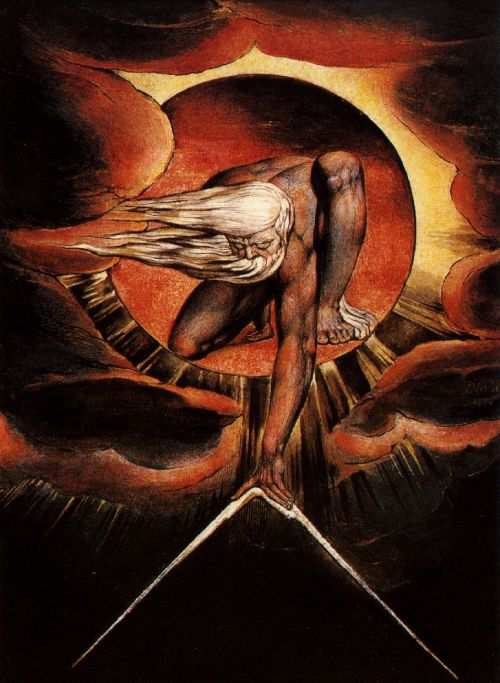
    This is Christ the King or Reign of Christ Sunday. The readings share images of Christ our King and of God as the Ruler of all. The artwork above is William Blake`s "Ancient of Days", which is the artist`s view of God, drawn from the Book of Daniel.

    As we begin this study, consider your own image of God. If you were to draw a picture, write a poem, share a description, choose some adjectives....who is God for you? What images come to mind.

    How do you react to Christ as our King, as God as the King of Heaven? Do these kinds of images speak to you or do you find them alienating...?

    Background to this Sunday

    Christ the King Sunday is a relatively new development. It does not bear the history of Christmas or Easter and does not possess the deep and traditional biblical backing of these celebrations. It is a modern observance, designed for the modern world. Pope Pius XI brought Christ the King Sunday into the church's liturgical year in 1925. He was attempting to do several things, but mainly to advance the message of God in Christ over and against that of the political forces moving in the world at that time--people like Mussolini, Franco, Stalin and Hitler.

    It was a time of focusing inward and rebuilding after the first Great War. People regarded some humans as saviors. The pope thought that the time was right for a refocusing on the One who is ultimately the king in our lives as people of faith. We, then, celebrate Christ as our king in order to help us realize that it is, first, Christ whom we serve.

    Prayer to Begin:

    Most High God, majestic and almighty,
    our beginning and our end:
    rule in our hearts
    and guide us to be faithful in our daily actions.
    Gather into Christ's holy reign
    the broken, the sorrowing, and the sinner,
    that all may know
    wholeness, joy, and forgiveness,
    praying in the name of the one who comes
    as Savior and Sovereign,
    and who lives and reigns with you
    in the unity of the Holy Spirit,
    one God, now and forever. Amen


    The study this week is written by Steve Clifton. Please post your comments and feedback and I will do my best to respond during the week.


    Daniel 7:9-10, 13-14

    The book is set in the days of the exile in Babylon. Daniel is a famous character from that time; according to Ezekiel, he was renowned for his piety and wisdom. The book was written about 165 BC, in Daniel's name, to give hope to people who suffer persecution under Antiochus IV Epiphanes, a Hellenistic ruler who tried to eliminate Judaism. Our reading is of a vision: earthly kingdoms will pass to make way for the kingdom of God. It presents past events as though in the future and continues slightly into the future.

    Out of the primordial “sea” (v. 2), the chaotic “deep” of Genesis 1:2, stirred up by the spirit of God (“winds of heaven”), Daniel sees four beasts arise – all agents of God. The first three are like a “lion” (v. 4), “bear” (v. 5) and “leopard” (v. 6). The fourth beast is too horrible to be likened to any animal; it has horns. Another small horn appears, symbolizing Antiochus. Thrones are set in place and God (“the Ancient of Days”, v. 9) takes his place, surrounded by attendants; his court sits in judgement. The fourth beast is put to death; the second and third are allowed to linger on. Then “one like a human being” (v. 13, or a son of man) comes from heaven and is presented to God, who gives him a universal, eternal, unconquerable kingdom (v. 14). (Christians saw this figure as the messiah, Christ, but to Jews he represented the archangel Michael and faithful Jews.) The interpretation begins in v. 16. King and kingdom are used interchangeably, so the “four great beasts” (v. 17) symbolize world powers that dominated Israel: Babylon, Medea, Persia and the Seleucids. The “holy ones of the Most High” (v. 18) are Jews who defied Antiochus’ decrees against Judaism; there will again be an independent Jewish state which will last for ever. The current persecutions will end. God has permitted Israel to be conquered, but will act soon to rescue his people.

    • Consider human history and all the changes that have occurred as empires rise and fall, as ways of thinking change, as world views shift... Recently the world recalled the fall of the Berlin wall and the collapse of the Soviet empire. The Cold War which dominated the last half of the 20th century just faded away. Daniel reminds us that empires come and go. History bring surprising changes, but there is one who is "Ancient" and who is above it all...
    • What changes have occurred in your life time? My grandmother passed away not long ago at the age of 103. The changes in politics, technology, communication, transportation, culture, science, geopolitics witnessed in her life time are staggering in scope. Consider the changes just in the last 100 years? What seemingly solid and everlasting things have faded away?
    • What Empires have faded in the last 100 years? Ottoman, Austria-Hungary, Soviet, British...
    • What that is part of the fabric of our world today will still be with us in 100 years? Will we be driving cars fueled by petroleum in 25 years? Will print media, which began with Gutenberg endure this century? What will fade away in the near future?
    • What remains constant? What promises to last?


    Psalm 93


    This is the first of enthronement psalms, the others being 94-99.

    This psalm is a hymn extolling God as king; it deals with the kingly rule of the God of Israel and was probably composed for use in connection with a festival.

    V. 3 speaks of waters raising up and “roaring”. To the ancients of Babylon and Sumer, waters were chaotic, very difficult for the gods to control. The ancient gods did battle with them; when the gods had won, creation followed. We find echoes of this in Genesis Chapter 1. Here God wins definitively, establishing world order, which “shall never be moved” , changed or defeated. God rules over all of creation, even the forces of chaos.

    V. 5a recognizes that the Law (“decrees”) are firm and offer dependable guidance (“very sure”).

    • God`s rule is seen in God's power over chaos. The Primal forces of chaos and disorder are subdued by God. Where do we see the forces of chaos rising up today. Where in your life do things seem disordered or beyond control?
    • What difference does it make to think that God really is in control?


    Revelation 1:4b-8

    John begins and ends this book as a letter. Literally, it is “to the seven churches that are in Asia” (v. 4a), Asia being a Roman province in western Asia Minor, but “seven” symbolizes totality, so John may speak to all churches in the province, or to all everywhere.

    The letter , coming through John, is from God, here described as being throughout time, meaning eternal. The salutation is also from “the seven spirits”: this may mean the Spirit of God (in Isaiah 11:2, the Spirit operates in seven ways) or the seven angels (Michael, Raphael, etc) closest to God (“before his throne”, v. 4) in contemporary Jewish thinking.

    Further, it is “from Jesus Christ” (v. 5), who is:
    • “the faithful witness”:
    • “firstborn of the dead”: in his resurrection, he inaugurated a new era;
    • “ruler ...”: being now exalted, he has power over all creation.


    “Amen”, a Hebrew word, means It is sure and trustworthy! or so be it!: it is both valid and binding. (In 3:14, Christ is called “the Amen”.)

    V. 8 tells us that, from A to Z, God is sovereign over all events of human history; his power is supreme (“Almighty”).

    • Written to persecuted churches living under Roman rule, this proclamation of Christ as ruler of all, of God who is supreme, stands opposed to the claims of Rome in that day. In their world Caesar was proclaimed everywhere as the supreme authority.

    • Who or what is seen as the supreme authority in our day? Where does power lie today? Who or what rules our lives? What would it mean to remember that God is actually in charge? That all other powers fade. After all, where is Caesar today?

    • How would things change if we recognized Jesus as the ultimate authority?


    John 18:33-37

    • Think of a King. Louis the XIV and the wealth of Versailles. Henry the VIII and his many wives. When Pilate thought of a King he may have thought of Caesar Augustus who ruled the Roman Empire through military might and administrative power.Now Jesus, a Galilean carpenter and itinerant preacher is brought to Pilate and he is said to be the King of the Jews. `Puzzled he asks : Are you the King of the Jews?"

    • Are you the King of the Jews?" Jesus wants to know why Pilate asks this question. What do you think?

    • Pilate evades a direct answer. He implies no knowledge of Jesus prior to this exchange. Do you think Pilate had heard of Jesus already? What would it be like to hear of Jesus first and only from those who hated him, like the chief priests?

    • What does it mean to testify to the truth? Have you ever had to give testimony in court? Can two people describe the scene of an accident differently and still think they are telling the truth? Jesus says we "belong to the truth." What do you think he means?

    • Clearly, if Jesus is a King, when compared to Caesar, Jesus is a different kind of King. Jesus talks about his kingdom being "not from this world." Some people take that to mean that God's kingdom has no earthly place, but is that what he means? Jesus says elsewhere that the kingdom of God is here and now and arriving and at hand.

    • What kind of King is Jesus? Where is his Kingdom? How do we live in it?