Tuesday, October 30, 2012

Readings for November 4, 2012

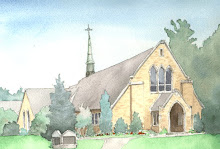
Ruth and Naomi
Artist: Qi He

Prayer:
Eternal God,
teach us to love you not only in mind and heart
but also in purpose and action,
that we may love the children of the earth,
in Jesus Christ. Amen.
 
·         Readings for November 4, 2012·         Ruth 1:1-18 and Psalm 146 •
·         Hebrews 9:11-14 •   Mark 12:28-34
·         Ruth 1:1-18
This is a short story set in the period before 1000 BC. This story is set “in the days when the judges ruled”. Before the institution of the monarchy, “judges”, wise people, arbitrated disputes, ruled the land, and raised a militia to defend it. Because of a “famine” in Judah, “Elimelech” and his family migrate to Moab, the high well-watered plateau to the east of the Dead Sea. “Ephrathites” were people in the Bethlehem area. Elimelech dies .
The two sons marry local girls, but then die , so now there are three widows. In this patriarchal culture, they are powerless, destitute. News reaches them that the famine is over , so they set out to return to Judah. But then Naomi suggests that they “go back ... to your mother’s house” Usually a widow returned to her father’s house; perhaps the author emphasizes the absence of men in the women’s lives.
Naomi acknowledges the steadfast loyalty of the two young widows to her and her sons, and prays that God will stand by them in the future. May they marry again; may they find permanent “security”, (v.9, true fulfilment), in the houses of their new husbands. She releases them from any sense of obligation to her sons. But they express their loyalty to her .
At the time, Israelites practised levirate marriage: when a man died with no heir, his brother was obliged to marry the widow; a person's name, their legacy, lived on through their sons. A son born of this union was the heir to the dead man’s property. (Levir is Latin for brother-in-law.) But Naomi has no more sons to marry Orpah and Ruth. She is neither pregnant nor likely to remarry Even if a miracle occurs, would they wait for the sons to grow up? In departing, Orpah kisses, blesses, Naomi. But Ruth remains constant : she is totally committed, for life, to accepting God as her god . Verse 17, the second half, is part of a sworn oath: Ruth invites God’s wrath if she fails in her commitment to Naomi. The decision is made: Ruth will accompany Naomi to Judah. Naomi places the welfare of Orpah and Ruth above that of her sons. Sons born to a man’s widow, conceived through a kinsman, were considered his heirs; in this way, he continued to exist in Israel. By suggesting that Orpah and Ruth remain in Moab, she removes any chance of her menfolk’s legacy continuing.
 
For reflection:
 
We no longer practice levirate marraige. What are our obligations when a family member dies? Do we have a responsibility to those they leave behind? If we do extend ourselves for those left behind when someone dies, are we doing it to honour the deceased or to help those who mourn?
 
Who are the widows of today? Who are the disenfranchised in our world?
 
 Its interesting to note that Levirate marriage both protected the legacy of a deceased man and ensured the security of the bereaved widow.
 
Do we have a greater obligation to the living or the departed? eg If someone dies and asks that there not be a funeral, but heir loved ones need some kind of service for closure, what do we do?
 
Ruth and Naomi make for an interesting household. What non-traditional family groupings do you know of...


·         Mark 12:28-34

Some religious leaders have asked Jesus questions about issues central to Jewish thinking, trying to trap him:

  Will he state publicly that his authority is from God?

  Should a Jew pay poll taxes to Caesar?

He has avoided entrapment in both cases.

Now, in Mark, a scribe asks a question to learn rather than to entrap. There were 613 precepts in Jewish law. Which is the most important? Jesus offers two, not one; the first is the shema (“Hear, ...”,), recited twice daily by pious Jews. He links a second to the first: love your neighbour, whoever he is, as you do yourself . Jesus combines these two precepts into a moral principle, linked by love. The scribe agrees and elaborates : there being only one God, we should love him undividedly, with all our faculties. Both precepts are “much more important” than temple-based religion. Jesus tells him that he is now almost ready for the coming kingdom of God.


For reflection:

We are commanded to love? is it possible to command love? Does this seem strange?

How does the Christian tradition define "love" ? Is is a feeling? A passion? A bond? An action? What kind of love id demanded of us?

Why does Jesus link love for God and love for neighbor? Can you have one without the other?

Is it easier to love God or neighbor? Which comes more naturally?


Tuesday, October 23, 2012

Readings for October 28 2012


Who do you trust? 
This image of Martin Luther, the great reformer,
would have inspired the trust and faith
of many Protestants in past generations. 
What do you look for in someone you can trust?

This Sunday is often called Reformation Sunday, in recognition of the historical impact of Protestant Reformers on both Reformed and even Roman Catholic churches, through the “counter-reformation”.

- Less centralized power structure
- Scripture translated to vernacular languages
- Emphasis on study, personal faith development
- Moved away from emphasis on ritual to life of faith lived in the world

On the night of October 31, 1517 Martin Luther nailed the 95 Theses on the Power and Efficacy of Indulgences to the Castle Church door in Wittenberg, Germany. Luther knew that many of the faithful would worship there for All Saints’ Day (November 1), and would see his theses in protest of church corruption and misguided theology. It also contained an invitation to a scholarly debate.

Reformation Sunday is celebrated primarily in “reformed” churches – Presbyterian, Lutheran, Calvinist, Dutch Reformed and others. Since the World Council of Churches meeting in 1982, there has been more dialogue with the Roman Catholic church. Consequently United Churches have decreased emphasis on “Reformation Sunday.


A Prayer of Martin Luther:
Behold, Lord, an empty vessel that needs to be filled.
My Lord, fill it.
I am weak in the faith; strengthen me.
I am cold in love; warm me and make me fervent,
that my love may go out to my neighbor.
I do not have a strong and firm faith;
at times I doubt and am unable to trust you altogether.
O Lord, help me. Strengthen my faith and trust in you.
In you I have sealed the treasure of all I have.
I am poor; you are rich and came to be merciful to the poor.
I am a sinner; you are upright.
With me, there is an abundance of sin;
in you is the fullness of righteousness.
Therefore I will remain with you, of whom I can receive,
but to whom I may not give.
Amen.

Question for Reflection: Dependence on God: what does it mean to you?

READ Job 42:1-6,10-17

This week’s passage is Job’s response to God, after God’s defense has been offered.

If you watch curling on TV, you know what the TSN Turning Point is: the point at which momentum changes and the probability of victory becomes clear. This passage is Job’s Turning Point. In the midst of all the arguments from his friends, in the midst of all Job’s denials, in the midst of God’s answer rising out of darkness, it all comes clear right here. Contemporary process would call it a “paradigm shift”.

It is sometimes hard to know who is speaking – initially Job, who quotes God, then confesses his ignorance. So, then why would Job go on to say that he will speak? More likely it is God’s voice who invites Job to “Hear, and I will speak;”

Job’s story reminds us of the reality of human loss; and the breakdown of the simplistic theology that if you are good, only good things will happen to you, so if bad things come, you must have done something wrong. Throughout it all, Job has trusted his heartflet experience, though he questions all human logic, he maintains his trust that somehow God will respond. Finally, in the thick of the storm that is his life, Job hears God’s voice, his eye acknowledges God’s reality. Job is pushed beyond all his expectations and welcomed into a new relationship with God. When he emerges, his perspective on all life is changed, and even his daughters receive a share of his blessing!

Job is one of the scripture stories that gets all done up with a happy ending, but somehow it seems superficial, tacked on to gloss over the real struggle for faith. Hope is already in the works, even in the midst of Job’s suffering. Job’s repentance at the end of the passage is really an acknowledgement of where he stands in relation to God, not an admission of past sin.


Questions for reflection:  What small signs of hope along the way have kept you engaged in your relationship with God, even long before a “happy ending”? 
Have you ever had a moment where you have felt like you encountered God? How did that change you?

READ Psalm 34:1-8

An individual song of thanksgiving, but not for personal use only. Often these individual testimonies to faith were made public in community to teach and inspire others for their own times of struggle.

Psalm 34 is also an acrostic psalm, which means that each line begins with a letter of the Hebrew alphabet, in sequence from A to Z, so to speak.

The section we read has 3 main themes, which give us our reflection points.

“Bless the Lord at all times” – it is not realistic to spend the whole day, every day in worship. How can we make the more mundane parts of our lives shine with the wonder of God?

“Heard by the Lord and saved from every trouble” – what do we do with the question of suffering in the short-term, when ultimately the Christian response is to focus on a long-term hope, whether you call it new life, or the kingdom of God?

“Taste and see that God is good!” – the whole person should be able to celebrate God, not just the intellect. How do YOU celebrate God with all five senses?

READ Hebrews 7:23-28

The beginning of this chapter introduced the readers to Melchizadek, at one time high priest to the people of Israel and felt by some to be greater than Abraham, whom Melchizadek blessed, according to Genesis 14. Therefore, from a Christian perspective, Christ as high priest is greater than all the Levites, even if they are descended from Abraham.

This is a good example of Christian midrash (interpretation) on an older text. The author of Hebrews is blending the story of Melchizadek with the Christian superiority complex. For early Christians with a Jewish background, this continuity between Melchizadek and Christ translates into a sense of security. While priests live and die, this is one who will intercede on their behalf forever.

The stories of priests in the scriptures often raise questions of corruption, exploitation of the role where one intercedes with God on another’s behalf. In Christian faith, especially the Reformed tradition, we are encouraged to go directly to Christ, without requiring intervention of a priest.

Question for reflection:  How do you understand the role or need for clergy, in the midst of your relationship with God?

READ Mark 10:46-52

This is the second story of Jesus healing a blind man in the gospel of Mark, the other is found at Mark 8:22-26. They bracket a section of stories where Jesus’ followers are being urged, metaphorically, to “see” what is right in front of them. Unfortunately, many seem to be “blind”, and this is a spiritual blindness that is much harder to heal!

Unlike the earlier blind man, who was supported by others in finding a way to see Jesus, in this story the crowd tries to keep Bartimaeus away – they do not want to hear what he sees in Jesus. In Mark, Bartimaeus is the first one to call Jesus “Son of David”, hinting at the procession of palms into Jerusalem, and Jesus’ confrontation with those who would accuse him of trying to reign politically. Throughout the story, Jesus’ “royal status” becomes more and more apparent, which he uses to help a noisy beggar become whole again – in a sense, they make each other whole.

Question for reflection:  In modern society, religion is often stereotyped as something that puts blinders on its believers, only science and logic can truly see. Have there been times in your life when you feel that your faith journey has helped you see something others couldn’t?

Closing Prayer: John Calvin
Grant, Almighty God, that as thou shinest on us by thy word, we may not be blind at midnight, nor wilfully seek darkness, and thus lull our minds asleep: but may we be roused daily by thy words, and may we stir up ourselves more and more to fear thy name and thus present ourselves and all our pursuits, as a sacrifice to thee, that thou mayest peaceably rule, and perpetually dwell in us, until thou gatherest us to thy celestial habitation, where there is reserved for us eternal rest and glory through Jesus Christ our Lord. Amen.


Tuesday, October 2, 2012

Readings for October 7, 2012 Thanksgiving and World Wide Communion


Joel 2:21-27
The first verse tells us that this book is by Joel "son of Penuel". We do not know who this Joel is, for he is not mentioned elsewhere in the Old Testament; however, the text does tell us something about him. First, he was a prophet. There are twelve prophetic books at the end of the Old Testament, of which Joel is one. Second, he has an appreciation of worship in the Temple. He mentions various officials, but never a king, so he probably lived after the return from exile. The earliest he could have written is then 515 BC, when the Temple was rebuilt. Sidon is mentioned. It was destroyed in 343 BC, so Joel wrote before that date.

After stating that his authority is from God , the prophet says that what he writes is to be told to future generations. He gives a highly realistic account of a plague of locusts. So great was the devastation that there were no grapes with which to make “sweet wine” ,) for celebrating a feast. The priests are to mourn, for no cereal offerings can be made in the Temple – all the crops have been destroyed. Even “joy withers away among the people” . This invasion, Joel says, is a foretaste of “the day of the LORD” ; it is a punishment from God. The “pastures”  are as though burnt by “fire”. Blow the shofar, the ram’s horn, he says, to warn of the approach of the End!  Judah is under attack. So thick are the locusts that the sun is obscured – a sign also of the end times The insects, like a conquering army on the move, are commanded by God. Can any survive the onslaught?  But there is still a chance: if a person repents and turns to God, perhaps he will be “gracious and merciful”

In this passage Joel advises blowing the shofar to summon the people to a fast. Put off your marriage! Priests, intercede for the people: may God spare Judah from mockery by other nations, of being thought God-less. God does forgive; he has “pity on his people”. He returns fertility to the land, restores Judah to place of honour among nations, and destroys the locusts. “Early rain” softened earth parched by the summer heat; it made ploughing possible; “later rain”, in April/May, provided sustenance for summer crops. Trees again bear fruit . God will “repay”  for the destruction by the locusts (“hopper ... cutter” – stages are in insect development) sent by him. He is still Judah’s God, “in the midst of Israel”, the only God. Judgement Day, “the day of the Lord” will come “afterward” much later. He will grant his power, his “spirit”, to all Judeans, to “sons ...” and even to “slaves” . Signs (“portents”, ) will warn of the coming of the Day. Then the remnant faithful to God “shall be saved” , including those “whom the LORD calls”. Fortunes will be reversed; those nations who have oppressed Judah will be judged adversely.

Reflection:

The prophet writes to a people who know they are dependant on the land for survival. This is an agrarian society. Locusts, rainfall...these are their preoccupations.

We too are dependant. But do we remember it? Do we need reminders?

When are you reminded of the importance of rainfall? Of good earth? What makes you remember that we are all dependant on the fruit of the land?

On World Wide Communion Sunday do we think of those who suffer because of drought or bad soil or a poor harvest?

On Thanksgiving are we grateful for the blessings that God has given?

 1 Timothy 2:1-7


1 Timothy, 2 Timothy and Titus are known as the Pastoral Epistles because the author addresses the needs and responsibilities of the leaders of Christian communities. The styles and themes of these letters are so similar that many think they were written by the same person. Although they claim to be written by Paul, the structure of the church they show and the specific content of their teaching indicate that they were written a generation or so after Paul. 1 Timothy begins by emphasizing the importance of correct belief and by cautioning against false teachers. The leaders are mentioned as bishops, deacons and elders. The term used here for the coming of Christ is not found in Paul's letters but is common in pagan Greek writings. In those days, a writer sometimes honoured an earlier leader by writing in his name.  Here the author has written: “I urge you ... [to] instruct certain people not to teach any different doctrine” but rather to teach “divine training” (or the plan of salvation) “that is known by faith”. He portrays Christian life as being like the discipline of servants in a large household. Now, at a time when Christians were suspect for not joining in worship of Roman gods, an act expected of all, the author urges them to pray for “everyone” , including civil authorities so that Christians may live “a quiet and peaceable life”, as good citizens yet faithful ones. This, he says, is in accord with God’s plan, for he wishes “everyone”  to be saved, through knowledge of Christian “truth”. God wills this for:
  • he is the “one God” for all people;
  • the “one mediator”, Christ, shared in being human with all of us, and represents us all before the Father, and
  • gave his life as the price of freedom (“ransom" for all.
  • His life and death were “attested” (shown to be an authentic part of the plan) “at the right time”, at the time chosen by God. Paul was “appointed” by God to announce (“herald”) this to all, genuinely sent out by him (“apostle”) to teach doctrine (“faith”) and the truth about God to everyone.

    Reflection:

    Christians have long wrestled with their relationship with secular power. Do we always obey the laws and norms dictated by governments and rulers? Do we set ourselves apart from the world and its ways?

    We can think of extreme case: the Church in Nazi Germany which followed the rulers of the land, the Religious right in the US, the Russian Church which is supporting Putin with great vigour....or the Dissenting Church in Germany, religious groups like the Amish, the Mennonites, the Puritans who fled Europe, the Quakers who will not take up arms for their country...

    So, when do you follow and when do you not?

    Matthew 6:25-33

    This passage is part of the Sermon on the Mount. In  verse 24  Jesus speaks of the impossibility of serving two masters: one cannot love both. “You cannot serve God and wealth”. (Calvin wrote that an idol is anything that comes between us and God.)

    A key word in this passage is “worry” . The Greek word means be preoccupied with or be absorbed by. To be preoccupied with food and appearance is to view life much too narrowly. Birds are an example of a proper attitude towards food : they work hard to find it, but they do not store it for possible future shortages. Worry, preoccupation, is futile: people desire a long life, but excess concern for it will not lengthen it . Wild “lilies”, abundant on Palestinian hillsides but dull brown for much of the year, are only brightly coloured for a few weeks. Even “Solomon”, known for his accumulation of wealth, could not compare to their  beauty. The “grass”  ends up being “thrown into the oven” as fuel for cooking. But if God cares for such plants, how much more will he provide for, clothe those who are faithful to him. So do not be preoccupied with your physical needs (v. 31). Such preoccupation is wrong on two counts:

  • those who do not follow Jesus (“Gentiles”, v. 32), not knowing of God’s munificence, seek security in possessions; and
  • God knows the needs of his people, so worrying about them is to suspect him of forgetting or neglecting his people and their needs.

  • Reflection

    So, what do you worry about? What is our society absorbed by...? Are their real concerns that are not useless worries?

    Do we take time to consider... birds, flowers, autumn leaves in colour, the blessings and beauty that surround us? What difference does it make when we make time to pay attention to the world around us...?

    What takes your mind off your worries?

    What might turn worries to gratitude?


    Tuesday, September 18, 2012

    Readings for September 23, 2012  
    • First reading and Psalm
      • Proverbs 31:10-31
      • Psalm 1
    • Second reading
      • James 3:13 - 4:3, 7-8a
    • Gospel
      • Mark 9:30-37

    Proverbs 31:10-31
    A proverb is a pithy statement expressing some truth in a striking way which is easy to remember. Most of this book is instructions given by a scholar (or father) to a student (or son) on how to lead a moral life, with proper respect for God. Life involves choices; it is important that one be informed, trained and persuaded to make the right ones. The objective of life is attainment of wisdom, i.e. integrity in God's eyes. Wisdom brings rewards.
    It is difficult to date Proverbs. Sayings and poems appear to have been formed into an anthology after the Exile (in the 400s BC), but some of the sayings probably date back to Solomon's time. Solomon was known for his wisdom. Some of the sayings are known in other ancient Near East cultures; they have been acculturated to the Jewish tradition.
    The book of proverbs ends with this poem, a detailed description of the roles and qualities of “a capable wife”. This appears to be part of “the words of King Lemuel. An oracle that his mother taught him” . Lemuel was of a tribe descended from Abraham’s son Ishmael. Similar advice to a ruler is found in Egyptian and Babylonian texts. The poem serves as a summary of Proverbs.

    Several of the wife’s qualities are also those of Lady Wisdom – so is the wife wisdom? In four places in Proverbs, wisdom is said to be “more precious [or better] than jewels” . The wife’s values to her husband are reminiscent of those of wisdom to her followers. Verses 13 to 17  speak of the woman’s extraordinary and ceaseless activity, and her good relationship with her family ; many of her good qualities are named, She is godly, so she “laughs” as she looks forward to Judgement Day; she is wise and teaches “kindness”. In verse 27  “she looks well to” is sophiyyah in the Hebrew text – so perhaps there is a word play on sophia, Greek for wisdom. The book begins with awe for the Lord  and it ends on the same theme .

    Reflection:
    Who would you name as a "good woman?" What charcteristics make her exemplary?

    What is wisdom? Is it valued? Where do you see wisdom at work?

    Wisdom in the greek is Sophia, which is, in the Christian mystic tradition, described as the wisdom of God, a pure creative spirit which emanates from God. And Sophia is feminine. What do you think of God having a feminine dimension?

    James 3:13 - 4:3, 7-8a

    The author has identified one sin commonly found in the community: intemperate speech. Now he seeks to correct a second: arrogance – and in the process, tells us the qualities of wisdom. His understanding of wisdom is like that of the Old Testament wisdom writers, and of Paul. If you do in life with “gentleness”, moderation, courtesy and humility (all qualities bound up in the same Greek word) then you are motivated by “wisdom” . But if “bitter envy”  or “selfish ambition” controls you, you must not boast of it and must not be “false to the truth”, i.e. Christian revelation, as put into practice by those who are wise. (The heart was considered the control centre of personality.) For being “false”, “such wisdom” is “earthly” rather than heavenly (“from above”); it is from the devil. “Envy and selfish ambition” or quarrels are the tools of evil; the devil works through “disorder”. On the other hand, godly wisdom is “peaceable ...” It does not dominate, but rather yields “good fruits”, to all, openly. Then: “those who make peace”, i.e. wise people, will, at Judgement Day, have (or be rewarded with) great integrity in the eyes of God.

    Reflection: Wisdom is the theme again. How do you know wisdom when you hear it? Who is wise? What is foolish?

    Wisdom produces good and peaceable actions. Where do we see this in our world?

    Mark 9:30-37
    The disciples have failed to cure an epileptic boy of an unclean spirit (vv. 14-29); this has led to them being puzzled. After Jesus cures him, they ask: how could you cure him but we could not? Jesus tells them: that kind of healing requires the power of prayer; it can’t be done by earthly means.

    Now, as they travel from Caesarea Philippi to Jerusalem, they re-enter Jewish territory. Jesus again wishes to avoid partial understanding of him and his mission. He again teaches that he, the “Son of Man is to be”  killed, but adds one new idea: he is to be “betrayed” or handed over to people; this is part of God’s plan. Both his suffering and betrayal are so beyond the understanding of the disciples that they dare not reveal their ignorance.

    Jesus now teaches more about being his followers. (Presumably “the house”,  is Peter’s.) The disciples have been arguing over rank. Jesus says, in effect: to be my disciple, you must abandon seeking position and prestige. He takes an example to welcome a child “in my name” (because of regard for who and what I am) is to welcome me, and indeed God. In Aramaic and Greek the word for “child” is the same as for servant, so verse 36  may also speak of welcoming a servant, one sent by his master. If so, Jesus is saying: whoever receives the servant receives the master. Whoever receives a child receives Jesus, and whoever receives Jesus receives God, who sent him. Both child and servant are without status. They are unable to repay a kindness, in earthly terms.

    Reflection

    Do we still seek status, position and privilege?

    In Jesus day children had very low status. It may be hard for us to appreciate how radical it was for Jesus to lift up a child and to ask his followers to be like one of them.

    What value do we place on children? In our society? In our Church?

    Who in our cultrue is lowly, unable to pay back kindness...?


    Monday, May 28, 2012

    Summer 2012


    We held our last Wednesday morning study for the season and will return to regular blogs in September.  Over the summer the website is being resdesigned, but hopefully you will find us at the same website address next fall - with a brand new look!  God's blessings, Elizabeth and Steve

    Monday, May 7, 2012

    Readings for May 13 2012 - Easter 6


    The artist, Maura McGurk, of the United States, describes her work this way:


    This piece, called Love One Another, is a bit of an experiment.


    Thematically, it’s a response to gay bullying, and looks at the aftermath of suicides caused by gay bullying. After the suicides of gay teens in Fall 2010 which brought international attention to the bullying problem in the US, it became clear that this is an issue which touches many people. It Gets Better videos have been viewed millions of times; President Obama and Ellen DeGeneres, among others, have said that everyone shares a responsibility for taking a stand against bullying.


    This idea of everyone doing their part is the inspiration behind Love One Another.


    This artwork is made of 100 painted, magnetized puzzle pieces. Unlike other artwork in this show, the individual components here are designed to be removed from the whole, with each piece taking on life of its own as a small abstract painting. This shows that we all “hold a piece of the puzzle”, we all have a stake in this problem, and can each do something to help solve it.

    Maura McGurk is part of an exhibit at the Museum of Motherhood in New York, featuring the expressions of mothers of gay children.

    Take a moment to centre yourself in prayer:

    O God who created our brotherhood and sisterhood, our parenting and caring for parents, our friends who become family, and our family who become friends, O God of all our relations, be with us. You surprise us, O God, with the miracle of life. You speak to us of the love that overcomes fear. You knit us together as individuals, then you knit us together in one body. O God, who created us sisters and brothers in Christ, open your Word to us this day, Amen.

    This Sunday is called Mother’s Day in Canada. In the UCC 1970’s congregations were encouraged to focus on celebrating the whole Christian Family, rather than mothers because of families living without mothers, or with stepmothers. So we call this Sunday Christian Family Sunday. You're wondering about Father’s Day? It usually coincides with Aboriginal Prayer Sabbath!

    The week following Sunday also contains Ascension Day (40th day after Easter, always a Thursday.) Some churches will use the readings for Ascension (Acts 1:6-11). In parts of Europe, Ascension Day is a legal holiday, schools and businesses are closed.


    READ Acts 10:44-48

    One of Luke’s recurring themes is the interruption of a speech: turning a good situation into a bad one, a bad situation into a good one, etc. Usually it underlines a turning point in the story, this literary device seems to add drama and urgency to the apostles’ word.

    For example: 
    Acts 2:37 - hearers are cut to the heart; 10:44 – the Holy Spirit; 17:32 - scoffers and supporters; 22:22 - shouting; 23:7 - dissension between Saducees and Pharisees; 26:24 – in Jerusalem, Paul interrupted by governor Festus.

    This interruption is really key however – the Holy Spirit marks a “conversion” – breaking away from the conventions and ethnic restrictions on faith. 

    Shortly afterwards, in Chapter 11:19 – the Holy Spirit goes on the road! P/Saul is picked up as apostle. 

    In this passage the interruption happens because Peter has given the testimony “everyone who believes” and the Holy Spirit then confirms it.

    In verse 47 - Peter asks “Can anyone withhold baptism?”

    Yes, in ancient ritual – even in the early church. Reasons that were applied: if they were pimps, idol-makers, or theatre performers, since there was no Christian theatre, only pagan. If they were teachers forced to teach about pagan gods, or that Caesar was son of God, they were denied; as were charioteers, wrestlers, soldiers, priests of a pagan idol, executioners, magistrates, any public servant – professionally they must support Caesar. Also for immorality, men who keep concubines, or concubines who are “unfaithful” to their one man were also refused. All this according to Hippolytus of Rome, 2nd-3rd century AD.

    Question for reflection
    How has our understanding of baptism changed? Would you see it more restricted or more accessible?

    READ John 15:9-17

    This passage builds on what we had last week – the image of the vine and branches.  Christ is the central vine – all the branches and new fruit must maintain their connection.

    Divine love is the model, in verse.9 "As the Father has loved me", verse.12 "love one another as (conjunction kathos) I have loved you".   Kathos can mean either “since” or a comparison like “just as”.

    Love is reciprocal – this is different somehow than “love your neighbour” or “love your enemies”, which are  clearly one –way. This is community, built with trust between the parties.

    Backgroun Context: There is the suggestion that Gospel of John was written for a Christian community experiencing persecution from Rome and increasing rejection by the Jewish community. The followers of Jesus needed to support one another when no one else will.

    This passage also holds tension, in the balance between the expression that the followers of Jesus are already loved, but are his friends IF… - to maintain that relationship they must also live with love.

    John’s gospel is distinct from Matthew, Mark and Luke in that Jesus seems more in control of his situation than a victim of circumstance (verse 13 “lay down your life”). He is perhaps alerting the followers to what lies ahead and the fact that if they choose to remain faithful, they may have to lay down their lives as well.

    Question for Reflection:
    How do we understand “laying down our lives” today? How do we apply it?


    READ 1 John 5:1-6

    The repetitiveness of 1 John is both blessing and curse.  We lose our train of thought when we read it over and over again, the same themes and images.  It follows a stairstep pattern:  the last image in one sentence is usually the first image in the next sentence.  But there are 2 new themes to be mined for deeper meaning within the familiar phrases: 

    1) Love with God leads to love with other people and vice versa; this is seen in the willingness to keep God's commandments - God's love is transformative, and the commandments are not burdensome.

    2)  This "victory that conquers the world" - does this mean separation from the world?  Or a way of living in the world so that the world's pressures do not swallow us whole?  The author gives the readers a way to be bold in the world - having faith IN Jesus Christ, not just about Jesus Christ, gives us the feeling of victory. 

    The verse at the end is likely better connected to what follows - the 3 elements that testify to Christ are spirit, blood and water.  They correspond with the image of the Trinity.

    Question for Reflection:
    How do you feel about being told you "must" follow the commandments? 

    Closing Prayer:
    Divine Vinedresser, What lessons do branches on a vine teach?


    Listen, they will tell you.
    “I need to be: well trained and planted in drained soil.
    Dig deep the planting hole. I am a deep rooter.
    Place me in full sunlight and let me lean on a trellis;
    If not, since I am a creeper, I will run wild and wind around anything convenient.
    Prune me in the dormant season.
    Make sure I remember always I am a branch, not the vine.
    Follow these lessons and I will produce delicious fruit.”
    Thank you, Jesus, the Vine, for this parable of the Vinedresser.
    In this journey of faith, this growing in the Spirit
    May I produce the precious and delicious fruits of:
    truth, humility and walking justly with you, the Vine, and me, the branch,
    to be a pleasing fruit for the Vinedresser.  Amen


    Tuesday, April 3, 2012

    Readings for Good Friday and Easter 2012


    Take a moment to deepen your reflections with prayer:


    Holy One, at the centre of every story is your promise of new life. In the gospel we rediscover your rising once again. In the Resurrection, you reach out to every one every where. In your new life, you empower us to do the same. Empower your Word alive in us this week, that we may die to our indifference and rise with new passion again. Amen


    It's always hard to find our focus this week: should we study the scriptures of Easter before we have marked Good Friday?

    I have selected some significant gospel readings for our study today. One of the realities of the gospel story (from cross to empty tomb) is that we have amalgamated four stories into one - Matthew, Mark, Luke and John's gospels. Like the two birth narratives at Christmas, we often move back and forth between them, glossing over the inconsistencies, and sometimes losing the integrity of what each author has written. The services based on the “Seven last words of Christ”, for example… beautiful but not particularly accurate!

    This year’s lectionary is based primarily in Mark, but for holy week readings the lectionary focuses on the accounts of John (which we will be using in worship.) In contrast, for the study this week, we will read the portions of Mark’s gospel – and take a time of silent meditation to reflect on what word or phrase was significant for you in each reading… you might want to write it down and read them back to yourself at the end of the study.

    READ Mark 14:43-52 (the Betrayal and Arrest of Jesus)

    READ Mark 14:53-65 (Jesus before the Council)

    READ Mark 14:66-72 (Peter’s Denial)

    READ Mark 15:1-15 (Jesus and Pilate)

    READ Mark 15:16-32 (Crucifixion)

    READ Mark 15:33-41 (Death of Jesus)

    READ Mark 15:42-47 (Burial of Jesus)

    READ Mark 16:1-8 (Shorter ending)

    READ Mark 16:9-13 (Longer ending)

    Question for Reflection:
    Does Mark’s re-telling of the story fit with your beliefs of death and new life? What was new or startled you in his narrative? What was missing, and what does that missing element say to you?

    Closing Prayer: (David Adam, England, 1989)

    It is the Lord,

    in the dawning, in the renwal, in the arrival, in the new day.
    It is the Lord,

    in the crowd, in the church, in the conversation, in the crisis.
    It is the Lord,

    in our joys, in our sorrows, in our sickness, in our health.
    It is the Lord,

    in the stable, in the garden, in the humble, in the stranger.
    It is the Lord,

    risen and returned, alive for evermore,

    giving me new life, saving me in strife.
    It is the Lord.

    Amen!